Western NY Fishing Report

Published: October 6, 2026
Western New York is entering a classic late-summer to early-fall fishing transition. Water temperatures are starting to drop, warm-water fish are feeding heavily, and salmon and trout are beginning to stage for their annual spawning runs. This Western NY Fishing Report reflects the changing conditions anglers are seeing across the region. Smallmouth bass are actively chasing baitfish, while walleye are holding in deeper water where conditions remain stable. At the same time, early-running King salmon are beginning to gather near river mouths, signaling the start of the fall migration. Clear, low tributary flows currently call for quieter presentations, while cooling nearshore water is gradually bringing more fish toward piers, shorelines, and river channels.
What Is the Current Western NY Fishing Report?
Fishing conditions are changing quickly as cooler nights begin to affect nearshore water temperatures and migratory fish start moving toward rivers and tributaries. Anglers are seeing strong feeding activity across several major Western NY fishing areas.
Water conditions: Lake temperatures are beginning to change as late-summer conditions give way to early fall. Wind has also affected Lake Ontario, creating localized upwellings and shifting the thermocline. Tributary flows have settled after earlier rain, while smaller streams are currently clear and low.
Recent fish activity: Smallmouth bass are actively feeding on baitfish and schooling in several areas. Mature King salmon are also beginning to stage outside river mouths, with some early fish already moving into major river channels.
Productive areas right now:
- Niagara Bar: Productive for trout and salmon, particularly around ledges and deeper structure.
- Lake Erie: Open-water areas from Cattaraugus Creek toward the Pennsylvania line are producing walleye and smallmouth bass.
- Erie Canal: Deep weed lines and areas with water movement are holding active fish.
- River mouths: Cooling nearshore water is bringing more deep-water fish closer to piers and river entrances.
Bait and lure patterns: Anglers are using deep-water trolling setups, flashers with flies, cut-meat rigs, UV spoons, three-way bottom-bouncing rigs, and drop-shot presentations. The best choice depends on the target species, depth, and current.
The biggest change: Early-running King salmon and larger brown trout are starting to appear in lower river systems. As overnight temperatures fall, more fish should move toward shallower nearshore areas, piers, and river mouths.
What Are Fish Biting on in Western NY?
Different species are responding to different presentations right now. Live bait is producing well for some river species, while trolling and artificial lures remain effective on deeper lake water.
Live Bait
Live bait is particularly effective when targeting smallmouth bass in the strong currents of the Niagara River. Live crayfish and large shiners are producing steady action when drifted through productive current areas. For walleye, nightcrawlers remain a reliable choice, especially when used with worm harnesses over deeper water.
Good choices include:
- Live crayfish for smallmouth bass
- Large shiners for river bass
- Nightcrawlers and worm harnesses for walleye
Jigs
Heavy jigging spoons in the 1 to 2-ounce range are producing walleye around deeper river eddies. The weight helps anglers maintain bottom contact in current and reach fish holding below the surface. For bass around structure, tube jigs and Ned rigs in green pumpkin or dark melon shades are producing consistent bites.
Crankbaits
Deep-diving stickbaits and crankbaits are working along rocky transitions and deeper drop-offs in lakes. In river environments, brighter crankbaits with an erratic action can trigger aggressive smallmouth bass, especially during lower-light periods.
Spinners
Weighted inline spinners and spinnerbaits are useful in shallower Erie Canal sections where bass and northern pike are holding around vegetation. Near pier heads, heavier glowing spinners can also attract staging salmon during early morning hours.
Soft Plastics
Drop-shot plastics, soft swimbaits, and fluke-style baits are producing around deep weed lines and structural humps. These presentations allow anglers to work specific areas without moving the bait too quickly through the strike zone.
Match the Bait to the Fish
- Walleye: Nightcrawler harnesses and holographic stickbaits.
- Salmon: Cut herring in meat rigs, flasher and fly combinations, and J-plugs.
- Smallmouth bass: Live crayfish, live shiners, tube jigs, and Ned rigs.
- Trout: Gold and medium-sized spoons worked close to the bottom.
What Fish Are Being Caught in Western NY?
Western NY waters are producing a broad mix of freshwater species as warm-water fish remain active and migratory salmonids begin their seasonal movement.
Walleye
Walleye are providing some of the more impressive catches of the current report. Fish measuring up to 31 inches have been reported around the Niagara Bar and in deeper Lake Erie water. Deep presentations are producing best where walleye are holding below the warmer surface layer.
Smallmouth and Largemouth Bass
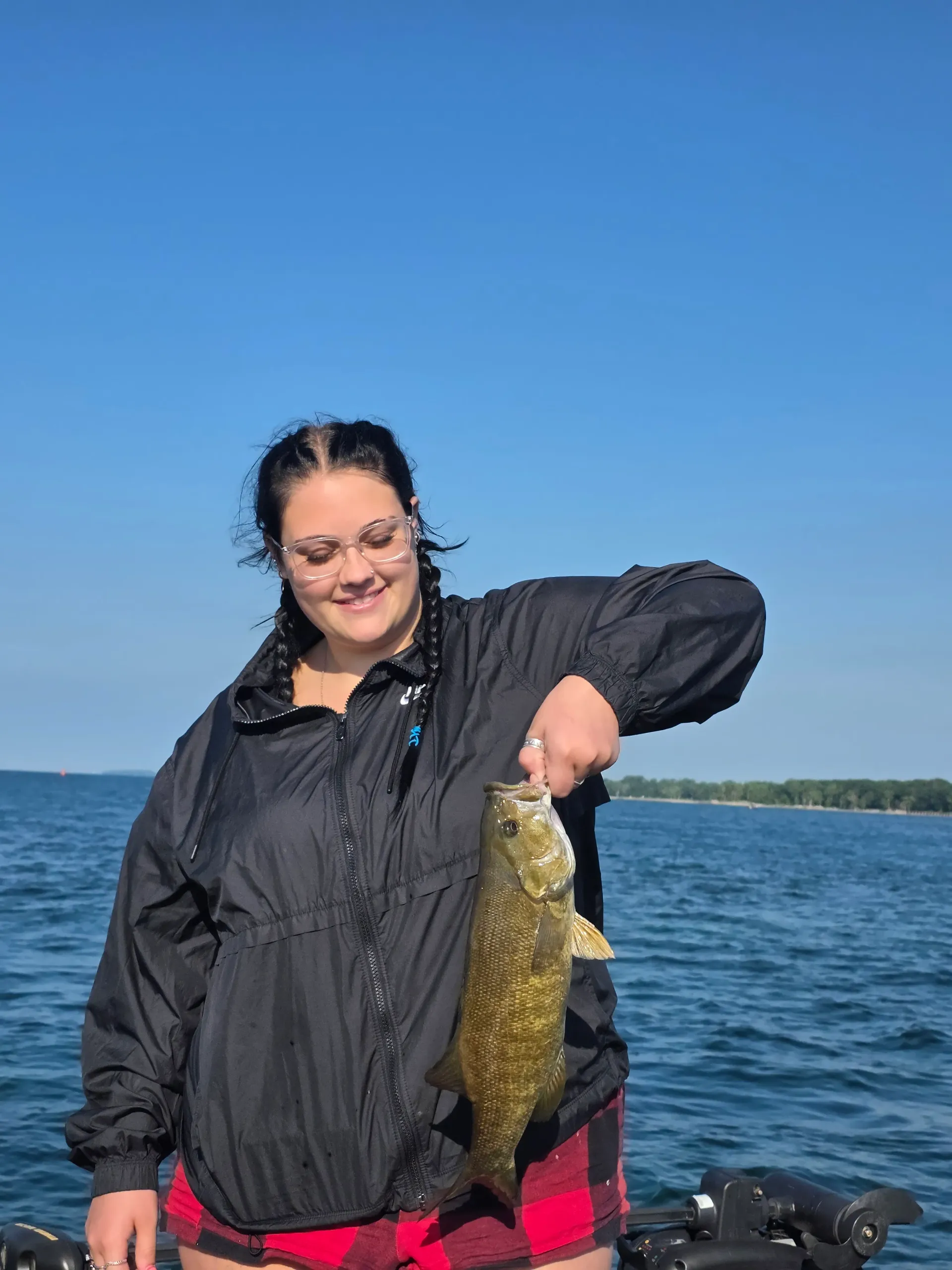
Smallmouth bass are abundant and active across the upper and lower Niagara River and around Lake Erie reefs. Rocky structure and current are key areas to check. Largemouth bass are holding around heavy vegetation, particularly in harbors and Erie Canal areas where cover gives them places to feed and ambush prey.
Perch
Yellow and white perch are schooling around weed beds and other underwater structure. Inland waters such as Chautauqua Lake are currently producing perch along with other panfish.
Trout
Brown trout and steelhead are becoming increasingly important as water temperatures begin to fall. Large brown trout have been reported along the Lake Ontario shoreline and Niagara Bar, while steelhead are also showing strong potential in productive areas.
Salmon
King, or Chinook, salmon are now beginning their seasonal movement toward Western NY rivers. Some mature fish are already staging near river mouths and entering major channels. Coho salmon are also present, although King salmon are currently the primary attraction. Mature Chinook are being reported in the 15 to 30-pound range.
Lake Erie White Bass
Lake Erie white bass are actively feeding around nearshore gravel bars and harbor entrances. Their aggressive feeding behavior can provide fast action for anglers using lighter tackle.
Other Species
Anglers are also encountering:
- Freshwater drum, often called sheepshead
- Channel catfish
- Northern pike
- Common carp
- Panfish
Where Are Anglers Finding Fish in Western NY?
Fish are not spread evenly across Western New York. Depth, structure, current, water temperature, and available forage are helping determine where different species are holding.
Lake Erie
Lake Erie is producing several strong patterns, particularly in the western New York zone from Cattaraugus Creek toward the Pennsylvania state line. Walleye are holding in approximately 70 to 90 feet of water, with many fish positioned around 65 to 75 feet down. Smallmouth bass are using rocky structures, reefs, and related areas in roughly 25 to 40 feet.
Current areas to check:
- Deep offshore water for walleye
- Rocky structure for smallmouth bass
- Reefs and drop-offs
- Nearshore gravel areas for white bass
Niagara River
The upper Niagara River is producing smallmouth bass over gravel bottoms and other shallow structure. The lower river is showing increased walleye activity, while the first incoming salmon are beginning to appear. The lower Niagara is particularly important during the seasonal transition because its deep current channels provide a route for migrating salmonids.
Erie Canal
Fish are concentrating around areas where structure and water movement come together. Lock structures, spillways, deep weed edges, and other current-producing areas are worth checking. Bass and northern pike are using vegetation, while panfish and other species can hold near walls, pilings, and slower water.
Genesee River
Warm-water species continue to dominate slower sections of the Genesee River. The lower river and harbor areas are beginning to see staging trout and salmon as these fish prepare to move upstream.
Tributaries
Cattaraugus Creek, Eighteenmile Creek, Chautauqua Creek, and other tributaries are beginning to show early seasonal activity. Current numbers remain relatively low in some smaller streams because many migratory fish are waiting for cooler temperatures and increased water flow before making their main movements upstream.
Inland Lakes and Waterways
Chautauqua Lake is one of the current inland hotspots. Extensive weed beds are providing cover and forage for bass, yellow perch, and other panfish. When fishing these areas, focus on weed edges, openings in vegetation, and nearby deeper water where fish can move between feeding and holding areas.
Western NY Fishing Conditions by Season
Fishing in Western New York changes significantly throughout the year because fish respond to water temperature, available forage, spawning cycles, and changing water conditions. Knowing these seasonal patterns helps anglers choose the right location, depth, bait, and technique.
- Spring: As nearshore water warms, fish move into shallower areas. Lake Erie tributaries see strong steelhead activity, while reefs and harbors can produce an active pre-spawn smallmouth bass bite. Yellow perch and bullheads also move into warmer inland shallows.
- Summer: From late June through August, many fish settle into deeper and more stable water. Walleye form deeper schools in the eastern basin of Lake Erie, while salmon move into the cold thermal layers of Lake Ontario. Smallmouth bass commonly shift toward deeper structure and stronger river currents.
- Fall: Cooling water makes fall one of the most important seasons for migratory fish. King salmon and Coho salmon begin moving toward rivers, followed by brown trout and steelhead. River mouths, tributaries, and deeper channels become increasingly important as these fish move upstream.
- Winter: The lower Niagara River remains an important winter fishery because it generally stays ice-free. Steelhead and lake trout provide opportunities for drift fishing, while inland waters can offer ice fishing for yellow perch, walleye, and northern pike.
How fish movement changes
Fish generally move between shallow nearshore areas during spring, deeper offshore water during summer, and concentrated river and tributary areas during fall migrations. Tracking these movements can make it easier to determine where to fish and how deep to present your bait.
Lake Erie Fishing Report
Lake Erie is currently showing a late-summer pattern, with clear open water and established thermoclines. Surface temperatures are beginning to fall, but deeper water remains more stable. Wind forecasts are especially important because conditions on the open lake can change quickly.
Popular target species:
- Walleye
- Smallmouth bass
- Lake trout
- Yellow perch
Where to find them:
Walleye: Look toward deeper water, particularly around 70 to 90 feet off areas such as Dunkirk and Barcelona harbors. Many fish are holding well below the surface within the deeper temperature zone.
Smallmouth bass: Rocky structures, reefs, shoals, and drop-offs in approximately 25 to 40 feet are productive areas. Seneca Shoal and Myers Reef are examples of the type of structure anglers can target.
Effective techniques:
- Use downriggers or lead-core line when trolling for deep-water walleye.
- Troll worm harnesses and stickbaits at the appropriate depth.
- Use drop-shot rigs around rocky transitions for smallmouth bass.
- Try vertical jigging when fish are holding directly below the boat.
Erie Canal Fishing Report
The Erie Canal provides a different fishing environment from the open Great Lakes. Current breaks, vegetation, walls, locks, and other man-made structures create areas where baitfish and predatory species can concentrate.
Fish commonly found:
- Largemouth bass
- Smallmouth bass
- Northern pike
- Channel catfish
- Common carp
- Bluegill
- Pumpkinseed
- Other panfish
Productive areas:
- Lock chambers
- Spillways
- Deep weed edges
- Bridge pilings
- Concrete retaining walls
- Feeder creek entrances
Effective presentations:
Spinnerbaits and chatterbaits can be worked through open sections of vegetation to target bass and northern pike. Soft plastic craws are useful around walls, structure, and weed edges. Live minnows suspended under a float can also produce bass and panfish near slower water.
Seasonal consideration: Late spring and summer generally provide the most consistent Erie Canal fishing. Activity can slow considerably in late autumn when annual winter water drawdowns begin.
Western NY River and Tributary Fishing
Western New York rivers and tributaries become increasingly important as migratory fish respond to falling water temperatures. Current flow and water clarity can make a major difference, particularly in smaller streams where fish can become wary in clear, low water.
Niagara River
The upper Niagara River provides strong smallmouth bass opportunities around shallow gravel areas and current breaks. The lower Niagara is much deeper and has powerful currents, creating a major migration route for salmonids while also holding resident walleye. As early fall approaches, anglers should watch river mouths and deeper current areas for the first incoming salmon.
Genesee River
Slower, deeper sections of the Genesee River can hold warm-water species such as bass and catfish. The lower river and harbor areas become more important as trout and salmon begin staging before moving upstream.
Tributaries
Cattaraugus Creek, Eighteenmile Creek, Chautauqua Creek, and other tributaries serve as important seasonal migration routes. At present, some smaller streams are holding only early fish because many salmonids are waiting for cooler temperatures and increased water flow before beginning the main run. Deep pools, current breaks, and areas with enough depth to provide fish with resting water are useful places to check.
Current Water and Access Conditions
Tributary flows have stabilized following earlier rain, and many smaller streams are currently running clear and low. These conditions call for quieter presentations and careful movement along the shoreline. Anglers fishing the lower Niagara should also pay close attention to footing. Rocky shorelines can become extremely slippery around strong current, so footwear with reliable traction is important.
Best Fishing Techniques for Western NY Waters
The best technique depends on the species, water depth, current, and type of structure being fished. A method that works in deep Lake Erie water may be ineffective in a shallow canal or fast-moving river.
- Trolling: Best for salmon, steelhead, and walleye in the open waters of Lake Erie and Lake Ontario. Downriggers, Dipsy Divers, and lead-core lines help place lures at controlled depths within the water column.
- Jigging: Effective for walleye, lake trout, and bass around deep reefs, river eddies, and other defined structure. Heavy 1 to 2-ounce spoons can reach fish in deeper or faster water.
- Casting: Useful for smallmouth bass, northern pike, and staging salmon around riverbanks, piers, and canal walls. Stickbaits, inline spinners, and soft swimbaits allow anglers to cover different depths and retrieve speeds.
- Bottom fishing: Productive for catfish, carp, walleye, and other bottom-oriented species. Three-way rigs, weighted presentations, live bait, and nightcrawler harnesses can keep the offering close to the bottom.
- Adjusting to conditions: Clear, low water calls for subtle presentations and careful positioning. Strong current may require heavier weights, while deeper lake water often calls for trolling or vertical presentations that can reach the fish's actual holding depth.
Why Choose RNK Outdoors for Western NY Fishing?
At RNK Outdoors, we provide fishing-focused gear selections and regional outfitting advice for anglers fishing the Great Lakes and high-current river environments. We focus on equipment and local knowledge suited to the demanding conditions found across Western New York.
We track changing water conditions, baitfish movement, insect activity, and thermocline changes across the Niagara and Erie County areas. Our knowledge of these local patterns helps us understand where fish are moving and which presentations can work best under current conditions.
We also provide guided fishing experiences for anglers who want to spend less time searching and more time learning productive techniques. On our guided trips, we provide species-specific rods, reels, and specialized tackle while helping anglers understand boat control, electronics, fish positioning, and precise bait presentation in Western NY waters.
Conclusion
A good Western NY Fishing Report can help anglers make better decisions before heading onto the water. Fish are already responding to cooler temperatures, with smallmouth bass feeding actively while walleye remain productive in deeper water. Early King salmon and brown trout are also beginning their seasonal movement toward rivers and tributaries. Checking weather, water conditions, fish activity, access, and current regulations can make a fishing trip more productive and safer. From Lake Erie and the Niagara River to the Erie Canal and regional tributaries, conditions can change quickly during this seasonal transition. For local knowledge, species-specific tackle, and guided fishing experience, contact RNK Outdoors to plan your next Western NY fishing trip.
Frequently Asked Questions
1. When does the fall salmon run peak in Western NY?
The main tributary and river salmon action typically peaks from late September through mid-October as water temperatures fall and autumn rain increases flows.
2. Do I need special gear to fish the lower Niagara River?
Yes. Strong currents and deep water often require heavy tackle, three-way rigs, suitable weights, and footwear with reliable traction for slippery rocks.
3. Where can I fish if Lake Erie is too rough?
Sheltered options include the Black Rock Canal, Buffalo Harbor, Dunkirk Harbor, and protected sections of the Erie Canal.
4. What fish can I catch in Western New York?
Common targets include walleye, smallmouth bass, largemouth bass, perch, trout, salmon, northern pike, catfish, carp, and white bass.
5. What are the best areas for Lake Erie fishing?
Deep water near Dunkirk and Barcelona can produce walleye, while reefs, shoals, and rocky structures can hold smallmouth bass.
6. What bait works well for Niagara River smallmouth bass?
Live crayfish and large shiners are productive choices, while Ned rigs and other soft plastics can also produce around structure.
7. When is the best season for salmon fishing in Western NY?
Fall is the key season, with King salmon beginning to stage in late August and early September before stronger runs develop through September and October.
8. Where can I find fish in the Erie Canal?
Focus on lock structures, spillways, deep weed edges, bridge pilings, retaining walls, and areas where feeder creeks enter the canal.
9. What should I check before fishing a Western NY tributary?
Check water flow, clarity, recent rainfall, temperature, access, regulations, and recent reports to determine whether fish are actively moving.
10. Is a fishing guide useful in Western NY?
A local guide can help anglers identify productive water, select appropriate tackle, understand seasonal fish movement, and improve presentations in unfamiliar waters.